
Moving from Los Angeles to San Francisco: Timeline, Costs, and Route Tips

By Tom Alten, Owner
Moving from Los Angeles to San Francisco is a long-haul move of several hundred miles, so the schedule matters as much as the price. Pick your season and route on purpose, line up San Francisco curb space early, and handle lease and DMV deadlines before they sneak up on you. Prime Moving LLC offers long distance moving from its Glendale office, and the points below are what we would check before any quote is signed.
Key numbers at a glance
- The Interstate 5 drive is approximately 382 miles and takes an estimated 5.5 to 6 hours in standard conditions, per Distance-Map.com.
- Moving from May through September costs 20% to 30% more than moving from October through April, according to 2026 industry data from AmeriSave Mortgage.
- Effective July 1, 2026, the Golden Gate Bridge southbound toll is $10.25 for FasTrak and $10.50 for license plate accounts, per 511 SF Bay.
- SFMTA wants moving truck permit applications at least 5 business days ahead, according to the SFMTA.
- California gasoline averaged $6.23 per gallon in October 2026, IndexBox reports from EIA data.
Which route should a moving truck take: I-5 or 101?
For most moves, I-5 is the better default because it is the shortest and fastest option, with US 101 as the fallback when weather or traffic turns against you. Distance-Map.com puts I-5 at about 382 miles and 5.5 to 6 hours of drive time. The same source lists US 101 North at roughly 430 miles and 7 to 8 hours under typical traffic.
The scenic coastal option, California State Route 1, spans approximately 460 miles and takes a minimum of 9 to 10 hours of non-stop driving, according to Pacific Coast Highway Travel. That is a vacation drive, not a moving-day route.
The catch on I-5 is Tejon Pass, known as the Grapevine. It crests at 4,144 feet, and Wikipedia notes that Caltrans frequently issues chain requirements or weather-related closures there during winter storms. The Los Angeles Times reports that the 101 bypasses Tejon Pass entirely but adds roughly 1.5 to 2 hours of baseline driving time.
In our experience, I-5 is usually the best route, but for cities that are closer to the 101, the 101 can sometimes be the better way to go.
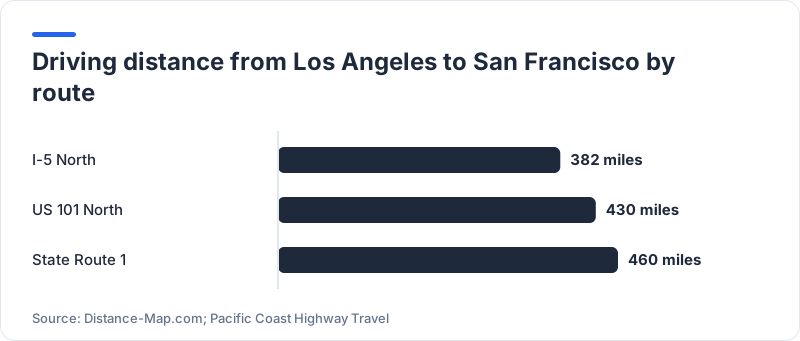
The inland I-5 route is the shortest, while US 101 and State Route 1 add miles.
What this means for you: if your move falls between late fall and early spring, leave a buffer day in the schedule. Check Caltrans road conditions the day before, and decide in advance who approves a switch to the 101 if the Grapevine closes. A longer route costs more driving time, and with gasoline averaging $6.23 per gallon in California, it costs more fuel too.
When is the best time to move from Los Angeles to San Francisco?
The cheapest window is October through April, and it has just opened. AmeriSave Mortgage reports that moving from May through September costs 20% to 30% more than moving from October through April. Summer is also when apartment turnover tends to cluster, so crews and trucks are in demand.
The trade-off is weather. Winter storms are exactly when the Grapevine is most likely to see chain requirements or closures, as noted above. If you move in the off-peak months, choose a date with a spare day on either side instead of a hard check-in time at the new place.
Weekdays are generally easier on parking and elevators than weekends, but confirm building rules before you book.
What does a Los Angeles to San Francisco move cost?
A long distance move is quoted per job, so there is no honest flat number. The cost depends on your inventory, the crew size, and how the trip is scheduled. Ask for a written quote and compare what each line includes, starting with the basics on our pricing page.
For reference, Prime Moving’s listed Los Angeles rates are:
- 2 Movers & A Truck: $129 (cash)
- 3 Movers & A Truck: $149 (cash), the economy package with partial packing and crating
- 4 Movers & A Truck: $189 (cash), with complete packing and labeling
All three list free use of wardrobe boxes and blankets, unlimited shrink wrap and tape, and packing and unpacking. Extras are $40 for each additional mover and $50 for each additional truck. There is a $69 truck fee and a 3-hour minimum. These are our Los Angeles local rates, so use them to understand how a crew is priced, not as a San Francisco quote.
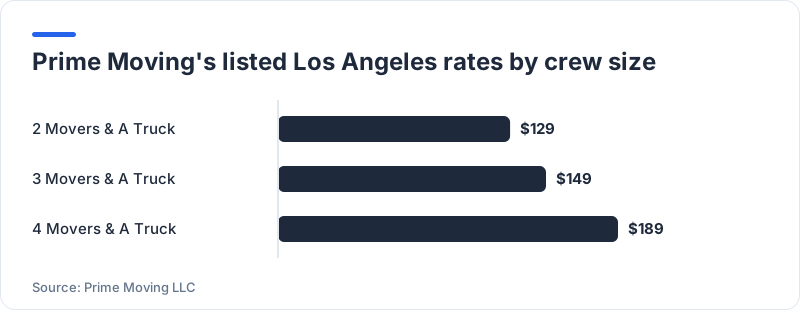
Listed cash rates for 2, 3 and 4 movers with a truck, before the $69 truck fee and extras.
Then add the road costs that sit outside any mover’s rate:
- Bay Bridge: Effective January 1, 2026, the westbound toll into San Francisco is $8.50 for standard two-axle passenger vehicles, according to the Metropolitan Transportation Commission. A moving truck is not a standard passenger vehicle, so check the current toll schedule for its axle count.
- Golden Gate Bridge: The southbound toll is $10.25 for FasTrak and $10.50 for license plate accounts, per 511 SF Bay.
- Fuel: IndexBox, citing the U.S. Energy Information Administration, reports $6.21 per gallon in Los Angeles and $6.31 in San Francisco, against the $6.23 statewide average.
If you are also driving your own car, budget for its fuel and tolls separately from the truck.
How do housing costs compare between the two cities?
Expect your housing budget to change, and run the numbers before you sign a lease. The California Association of Realtors August 2026 report, as summarized by North Coast Financial, shows a median sold price for an existing single-family home of $946,950 in Los Angeles County and $1,875,000 in San Francisco County.
For buyers, the California Association of Realtors Second-Quarter 2026 affordability index says a median-priced San Francisco home required a minimum qualifying household income of $535,600. In the Los Angeles metro area, the figure was $214,400.
Renters see a smaller but still real gap. HUD’s fiscal year 2025 Fair Market Rent for a two-bedroom is $2,625 a month in the Los Angeles metro area and $3,318 in the San Francisco metro, per SwingUnit (RentData.org lists the San Francisco figure too). USAFacts, using Census data for 2020 to 2024, puts San Francisco’s median gross monthly rent at $2,476, with renter households in the surrounding metro earning a median of $7,944 a month.
A smaller home is a common result of that gap. That makes a packing and unpacking pass before moving day worthwhile, since you will not want to pay to move furniture that will not fit. If your lease dates do not line up, storage services can cover the gap.
How do parking and curb permits work in San Francisco?
Reserve curb space for the truck well before moving day, because the SFMTA process has lead times. The agency requires Temporary No Parking applications for moving trucks at least 5 business days before the enforcement date. In unmetered zones, signs must be posted at least 72 hours ahead, so the signs need time to be in place and the cars need time to move.
The SFMTA’s 2024 to 2026 fee schedule lists a base posting fee of $322 for 1 to 4 signs applied for at least 14 days in advance. Metered spaces add $18 per space per day. Rules and fees get updated, so check the current SFMTA terms before you apply.
The Los Angeles end has its own trap. Parking a van in a posted street cleaning zone brings a $73 LADOT citation, and Klean-Sweep notes that this represented approximately 26 percent of all parking tickets issued across the city in 2024 (Crosstown LA reports the same trend). Read the posted signs on your block the day before loading.
Also ask both buildings about elevator reservations and loading zones. Those rules vary by building, and the manager can tell you what they require.
What paperwork and deadlines come with the move?
Three deadlines matter most, and each one comes with a source you should double-check.
- DMV address update: The California DMV handbook and Vehicle Code Sections 14600 and 4159 call for notifying the DMV of your new residence within 10 days of moving.
- Security deposit back in Los Angeles: A vacating tenant should receive the deposit and an itemized accounting of deductions within 21 calendar days after surrendering the property, per the California Department of Justice. Take dated photos when you hand back the keys.
- Security deposit in San Francisco: Since July 1, 2024, Assembly Bill 12 caps deposits at 1 month’s rent for the vast majority of rental properties, the City and County of San Francisco explains.
On the moving contract itself, the California Department of Consumer Affairs says that under Maximum Rate Tariff 4, movers on intrastate moves like this one must give you the official informational moving booklet before you sign. If a mover skips it, ask for it.
What does a realistic timeline look like?
Work backward from the date you need the truck at the San Francisco curb. The permit lead times are the firm anchors, and everything else flexes around them.
In our experience, small moves can be done on the same day, with same-day delivery.
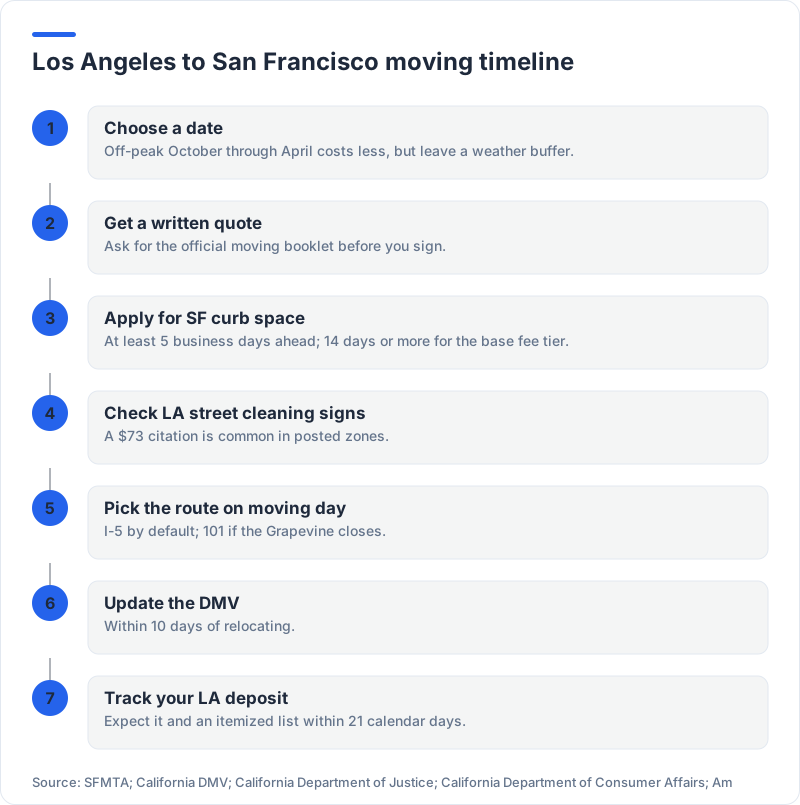
A sequence of the key decisions and deadlines, from choosing a date to settling up.
For the packing stage, our guide to moving boxes and supplies covers what to have on hand.
Frequently asked questions
How long does it take to drive from Los Angeles to San Francisco in a moving truck?
The I-5 route is about 382 miles and an estimated 5.5 to 6 hours in standard conditions, according to Distance-Map.com. The 101 route takes roughly 7 to 8 hours. Fuel stops, traffic and unloading time come on top of that, so plan the delivery for the following hours or the next morning.
Is it cheaper to move in winter?
Usually, yes. Moving from October through April costs 20% to 30% less than May through September, per 2026 industry data cited by AmeriSave Mortgage. The risk is Grapevine weather, so keep your delivery window flexible.
Do I need a permit for a moving truck in San Francisco?
For reserved curb space, yes. SFMTA requires Temporary No Parking permit applications at least 5 business days ahead, and the base posting fee is $322 for 1 to 4 signs applied for at least 14 days in advance. Check the current SFMTA rules, since fees and procedures are updated.
How soon do I update my address with the DMV?
California law calls for notifying the DMV within 10 days of relocating, per the DMV and the Vehicle Code sections it cites. Make it one of your first tasks after unpacking the essentials.
If you are planning a Los Angeles to San Francisco move, Prime Moving LLC can walk you through crew size, timing and a written quote. Call (747) 222-0905 (open 8 AM to 8 PM every day) or use the quote form below this article.
Sources
- Distance-Map.com
- AmeriSave Mortgage
- 511 SF Bay
- SFMTA
- IndexBox
- Pacific Coast Highway Travel
- Wikipedia
- Los Angeles Times
- Metropolitan Transportation Commission
- North Coast Financial
- California Association of Realtors
- SwingUnit
- USAFacts
- SFMTA
- Klean-Sweep
- California DMV
- California Department of Justice
- City and County of San Francisco
- California Department of Consumer Affairs